Hospitality Bedding · Procurement & Care
Hotel Bed Sheets: Choosing Between Percale and Sateen for Guest Rooms
A sheet is one of the first things a guest feels and one of the hardest-working textiles in a hotel. Percale and sateen offer two distinct experiences: one crisp and cool, the other smooth and softly lustrous. The best choice depends not on a thread-count race, but on the room, the guest experience you want to create, and the demands of your laundry operation.
Pull back the coverlet in a guest room and the bed’s quiet details come into focus: the clean line of a hem, the smoothness of a pillowcase, the way a sheet settles against the skin. For hotel operators, these details are more than decoration. Sheets are in direct contact with guests, laundered repeatedly, and expected to look composed through a steady cycle of use. They must feel welcoming without becoming fragile, and perform well without turning the linen room into a constant source of replacements.
Weave is one of the most useful starting points for making that decision. Percale and sateen are both commonly made from cotton, but their yarns interlace differently. That construction affects the fabric’s surface, drape, breathability, and appearance. Neither is automatically the better hotel sheet. Each can work well when the fiber, weight, finish, fit, and care process are suited to the property.
This guide sets out the practical differences, explains how to assess hotel bed sheets beyond the label, and offers a selection process for matching hospitality bedding to room conditions and operational needs.
Percale and sateen: two different surfaces
Percale uses a simple one-over, one-under weave. The balanced interlacing creates a relatively matte surface and a recognizable crisp hand. Many people describe percale as cool, fresh, or freshly laundered. Its structure tends to feel light and breathable, qualities that can be appealing in warm rooms or for guests who prefer a less enveloping sleep surface.
Sateen is woven with more threads passing over the surface, creating a smoother face and a subtle sheen. The finish often feels soft and fluid, with a drape that can make a bed look especially polished. Some guests associate sateen with a more enveloping, silky sensation. The same surface character may feel warmer than percale, although the result also depends on fiber, fabric weight, room temperature, and bedding layers.
These descriptions are useful tendencies, not guarantees. A lightweight sateen may feel less substantial than a heavy percale, while a tightly finished percale may not feel as airy as expected. Fiber quality, yarn size, finishing treatments, and construction all influence the final result. A specification sheet gives clues; touching and laundering a sample gives a more complete picture.
Percale at a glance
- Crisp, matte surface with a structured hand
- Often selected for a cool, breathable feel
- Can suit warm climates and guests who prefer a lighter surface
- May crease more visibly than a smoother sateen
- Feel can soften with use and laundering, depending on fabric and care
Sateen at a glance
- Smoother face with a subtle sheen and fluid drape
- Often chosen for a soft, polished impression
- May feel warmer or more enveloping to some sleepers
- Can show surface wear or snags differently, depending on quality and use
- Appearance and hand depend on yarn, finish, weight, and laundering
Start with the guest room, not the thread-count label
Thread count measures the number of threads within a defined area of fabric, but it does not describe every quality that matters. The number alone cannot tell an operator how the sheet will feel, how well it will fit a mattress, or how it will respond to repeated commercial laundering. The weave and the way the count is reported matter, as do fiber length, yarn construction, finishing, and fabric weight.
A higher number is not a universal shortcut to a better hotel sheet. A well-made, moderate-count cotton percale may be more comfortable and practical than a poorly specified fabric with a larger number on its label. Compare like with like: ask for the fiber content, weave, fabric weight where available, and care instructions. Then examine the actual cloth. Is the surface even? Does it feel pleasing to the hand? Are seams secure and hems consistent? Do fitted corners stretch and recover cleanly?
Consider the room environment, too. A property in a hot, humid region may prioritize a crisp, breathable surface, while a cool-weather retreat may value a smoother, more substantial feel. Heating and air-conditioning, mattress protectors, duvet weight, and room ventilation all affect how guests experience the bed. A sheet cannot compensate for an overly warm duvet, but it contributes to the overall impression of temperature and comfort.
Guest expectations also vary within a single property. Business travelers, families, and leisure guests may arrive with different preferences, and some will be sensitive to heat, texture, or the sensation of a crisp versus smooth fabric. If the hotel’s identity is built around a traditional, freshly pressed bed, percale may support that impression. If the desired atmosphere is softer and more relaxed, sateen may be a better match. A consistent choice across rooms can simplify operations, but a small, controlled trial is often wiser than assuming one construction will suit every setting.
Fiber, weight, and finishing shape performance
Weave is only one part of a sheet’s construction. Cotton remains a familiar option for hospitality bedding because it is comfortable, widely understood, and available in a range of weaves and weights. Longer cotton fibers can be spun into smoother yarns, but fiber claims should be evaluated alongside construction and tested performance rather than treated as a guarantee on their own. Linen and regenerated cellulosic fibers may also appear in bedding programs, each bringing different characteristics and care considerations.
Fabric weight can help teams compare samples, particularly when assessing whether a sheet feels light, substantial, or somewhere between the two. However, weight should not be interpreted in isolation: a fabric’s structure affects how that weight feels in use. Finishes can alter softness, drape, wrinkle behavior, and the initial hand. Some fabrics arrive with a pronounced crispness; others are treated to feel softer from the first night. The relevant question for a hotel is how the sheet performs after the property’s actual wash-and-dry routine, not only how it feels fresh from its packaging.
Construction details can be operationally significant. Check that flat sheets are sized to allow dependable bed-making and sufficient tuck, and verify the dimensions and pocket depth of fitted sheets against the mattress, topper, and protector together. A sheet that fits a bare mattress may not fit the assembled bed. Secure elastic, reinforced corners, and clear size identification can reduce avoidable housekeeping delays and mis-sorting.
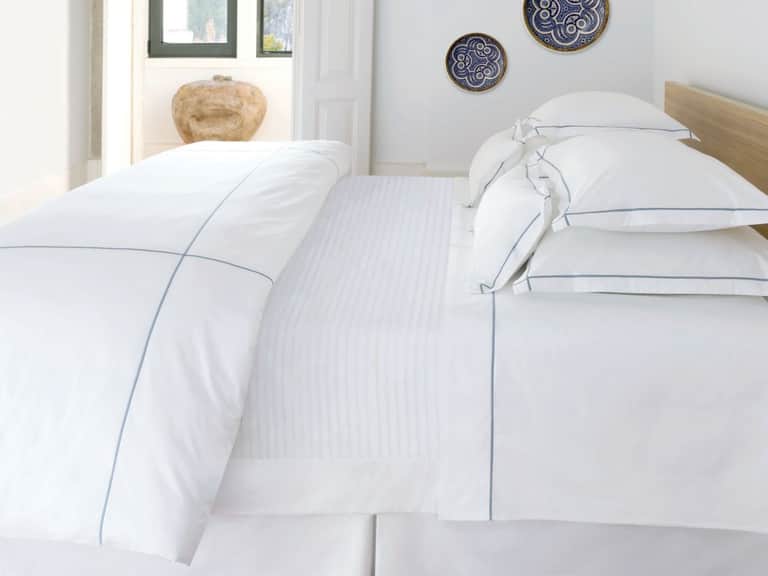
Finishing details deserve the same practical scrutiny. Decorative embroidery and trim can reinforce a particular visual identity, but embellishment may require extra care or make damage more noticeable. If the property uses a centralized laundry process, confirm that the complete article—not just the main fabric—is compatible with the specified wash, drying, and pressing conditions.
How laundering changes the decision
In a hotel, every sheet has a working life measured not only by nights in service, but by cycles through collection, sorting, washing, drying, finishing, inspection, and storage. Heat, chemical exposure, mechanical action, over-drying, and incorrect loading can shorten that life. The care instructions provided for a textile should be compared with the laundry facility’s real capabilities and approved process.
Percale’s crisp surface can appeal to guests and may support a neat, structured bed presentation. It can also show wrinkles more readily than a smoother fabric. If the property relies on a particular finishing method to achieve its preferred appearance, make sure the fabric can tolerate that method and that the process is applied consistently. Sateen often looks smooth and refined, but its surface may be more susceptible to visible abrasion or snagging in some conditions. Actual outcomes vary, so test the proposed fabric through representative laundering before making a large purchase.
Rather than judging a new sample only on its first wash, arrange a structured trial. Use the hotel’s normal detergent, water conditions, machine settings, dryer, and finishing equipment. Inspect samples after repeated cycles for changes in hand, color, shrinkage, seam integrity, pilling, and fit. Record what was tested and compare results against the supplier’s stated care requirements. Where laundry is outsourced, clarify the processing conditions and quality checks with the service provider.
Care discipline can protect comfort as well as service life. Avoid overloading machines, which can reduce effective cleaning and increase mechanical stress. Separate items according to the facility’s established sorting rules, address stains using approved procedures, and avoid using chemicals or temperatures that conflict with textile guidance. Do not rely on fabric softener to solve a harsh hand without first checking compatibility; residues can affect absorbency, finish, or subsequent processing. Follow the product’s instructions and the laundry supplier’s technical guidance.
Track linen losses and condition over time. If one sheet type is consistently removed from service early, identify the cause before changing the specification. The problem may be a mismatch in fit, a rough machine component, unsuitable chemistry, excessive drying, or housekeeping handling—not simply the weave. A simple inventory record that captures purchase dates, usage, repairs, and retirement reasons can make future decisions more evidence-based.
A practical selection process for hotel operators
A short, repeatable evaluation helps purchasing teams compare options on more than first impressions. Involve housekeeping and laundry staff as well as procurement: each sees a different stage of the textile’s journey. Use the following steps to make a decision that accounts for guest experience and daily operation.
- Define the intended experience. Decide whether the bed should feel crisp and cool, smooth and softly draped, or balanced between the two. Note the property’s climate, room temperature, duvet weight, and design direction.
- Write a complete specification. Record fiber content, weave, fabric weight if supplied, dimensions, fitted-sheet pocket depth, color, finishing, seam construction, and care requirements. Avoid using thread count as the sole purchasing criterion.
- Check bed compatibility. Measure mattresses with protectors and toppers in place. Test fitted corners and flat-sheet dimensions on a made bed, and verify that the pieces are easy to identify and sort.
- Request production-representative samples. A sample should match the proposed article’s fiber, finish, color, and construction. Confirm that any specification changes during production will be disclosed.
- Run a laundry trial. Process the sample through the facility’s normal routine for enough cycles to reveal early changes. Document the results and inspect both appearance and feel.
- Ask housekeeping to evaluate handling. Have staff make and strip beds, fold and store the sheets, and report on fit, drape, ease of identification, and any recurring difficulty.
- Review cost over service life. Compare initial price with expected use, replacement frequency, laundry requirements, and the operational cost of sorting or special care. The least expensive sheet per unit may not be the most economical choice over time.
For hotels that want to test both constructions, keep the trial controlled. Use comparable rooms and bedding, maintain the same laundry process, and gather structured feedback rather than relying on a few anecdotal impressions. Guest comments can help, but they should be read alongside objective observations about wear, fit, processing time, and replacement rate.
A closer look at percale in hospitality bedding
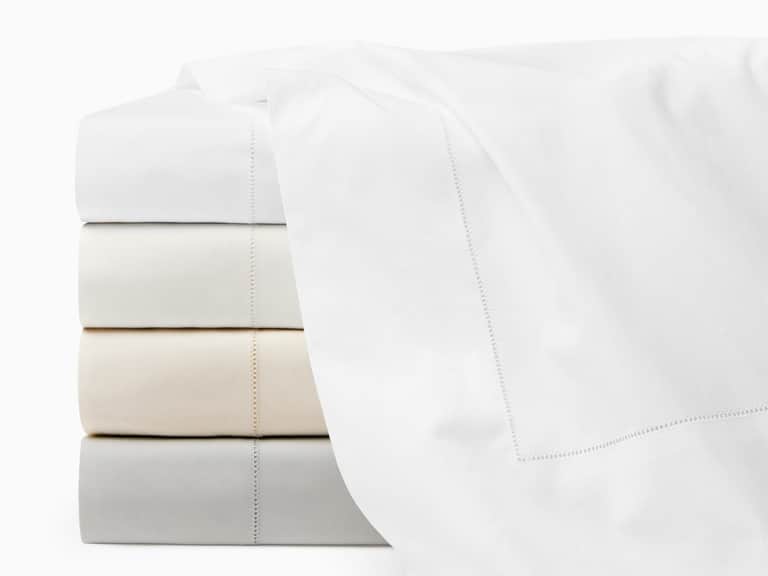
Percale is a natural candidate when a hotel wants a cool, crisp impression and a straightforward surface. Its matte appearance pairs easily with a clean, classic room scheme, and its balanced weave is familiar to guests who associate hotel bedding with a fresh, pressed feel. A useful example of the construction is the Luxor Flat Sheet, made from Egyptian cotton percale with a light, airy feel and a matte finish. Its hemstitch is a finishing detail; the relevant procurement considerations remain its material, construction, care guidance, fit, and performance under repeated use.
Operators considering percale should make sure that crispness does not become stiffness. A fabric that feels too firm at the start may soften with laundering, but the expected change should be verified rather than assumed. Ask suppliers how the textile is finished, follow the specified care routine, and judge the hand after the sample has gone through the same process as the hotel’s regular linen. Be especially attentive to the guest-room climate and the whole bedding system: crisp sheets under a heavy duvet can still feel warm to a sleeper.
When sateen may be the better fit
Sateen can be appropriate when the desired room experience emphasizes a smooth, refined surface. Its subtle sheen may complement a more tailored design, and its fluid drape can lend a bed a softer appearance. Guests who like a silky hand may prefer it to percale, particularly when room temperature and other bedding layers are managed to suit the fabric.
As with percale, the label is not enough to establish durability. Examine the yarns, seams, and finish, then put the material through a realistic laundry trial. Look for changes in sheen, surface condition, color, and hand. Teach staff to handle and sort the sheets according to the property’s process, and monitor whether the smooth surface shows wear in high-contact areas. A successful choice is one that continues to look and feel appropriate after repeated service, not simply one that makes a strong first impression.
Build consistency into care and inspection
Once a hotel has selected its sheets, consistency depends on shared procedures. Keep the textile specification and care guidance accessible to the teams that handle the linen. Make sure staff understand which articles belong together, how soiled linen should be sorted, which stain treatments are approved, and what condition warrants repair or retirement. A clear system reduces the chance that a good fabric is undermined by avoidable processing mistakes.
Inspect clean sheets under good light. Look for stains that remain after washing, frayed hems, damaged elastic, seam separation, thinning, discoloration, and persistent odor. A sheet with a small repairable fault may remain useful in a suitable role, while a compromised item should not return to a guest bed. Track common damage points: repeated failures at the same corners or edges can reveal a fit problem, a handling issue, or a machine-related cause.
Store linen in a clean, dry, well-organized space, with stock rotated according to the property’s established method. Correct folding and labeling make the right sizes easier to locate, while sensible par levels help prevent rushed substitutions. The aim is not merely to preserve appearance on a shelf. It is to ensure that each room receives a complete, correctly sized set in dependable condition.
Common purchasing mistakes to avoid
- Buying by thread count alone. Compare weave, fiber, weight, finish, dimensions, care instructions, and trial performance alongside the number.
- Assuming all cotton feels alike. Fiber and yarn characteristics, fabric construction, and finishing can create markedly different surfaces.
- Ignoring the complete bed build. Mattress protectors and toppers change the dimensions a fitted sheet needs to cover.
- Approving a textile before laundering it. A new sample may feel and behave differently after repeated cycles.
- Overlooking care compatibility. A sheet that requires a process the laundry cannot reliably deliver may create extra cost and inconsistent results.
- Replacing a specification before finding the cause of failure. Early wear may point to process, fit, or handling problems rather than an inherent flaw in the weave.
The best hotel sheet is the one that works in context
Percale and sateen are not opposing answers to a single question. They are different tools for shaping the sleep surface. Percale tends toward crispness, a matte finish, and an airy impression. Sateen tends toward smoothness, a gentle sheen, and a more fluid drape. Fiber, fabric weight, finishing, room conditions, laundry practice, and guest expectations influence how those traits are experienced.
For hotel teams, the clearest path is to specify carefully, sample thoughtfully, and test sheets through the real operational cycle. Invite housekeeping and laundry staff into the evaluation. Check fit on the assembled bed, compare care requirements with facility capabilities, and review condition over repeated washes. Then use guest feedback and service records to refine the choice.
In a guest room, good bedding rarely calls attention to its engineering. It simply feels right: clean, comfortable, properly fitted, and ready for another night. Choosing the right weave—and caring for it with discipline—helps make that quiet reliability part of the stay.
Frequently asked questions
Are percale or sateen sheets better for hotels?
Neither is universally better. Percale is often chosen for a crisp, breathable feel, while sateen offers a smoother surface and subtle sheen. The best option depends on the property’s room conditions, guest experience, laundry process, and tested service life.
Does a higher thread count mean better hotel sheets?
Not by itself. Thread count does not reveal the full quality or performance of a sheet. Compare fiber, weave, weight, finish, construction, fit, care requirements, and how a representative sample performs after laundering.
Are percale sheets always cooler than sateen?
Percale often feels crisp and airy, while sateen may feel smoother and more enveloping. These are general tendencies, not guarantees. Fiber, fabric weight, finishing, room temperature, and duvet choice all affect perceived warmth.
What should a hotel test before placing a bulk order?
Test fit, feel, color, seams, and care compatibility using production-representative samples. Process them through the normal laundry routine for repeated cycles, then inspect for changes in hand, appearance, shrinkage, damage, and ease of bed-making.